 EN
EN

Permanent Metal Marking with Fiber Laser Markers
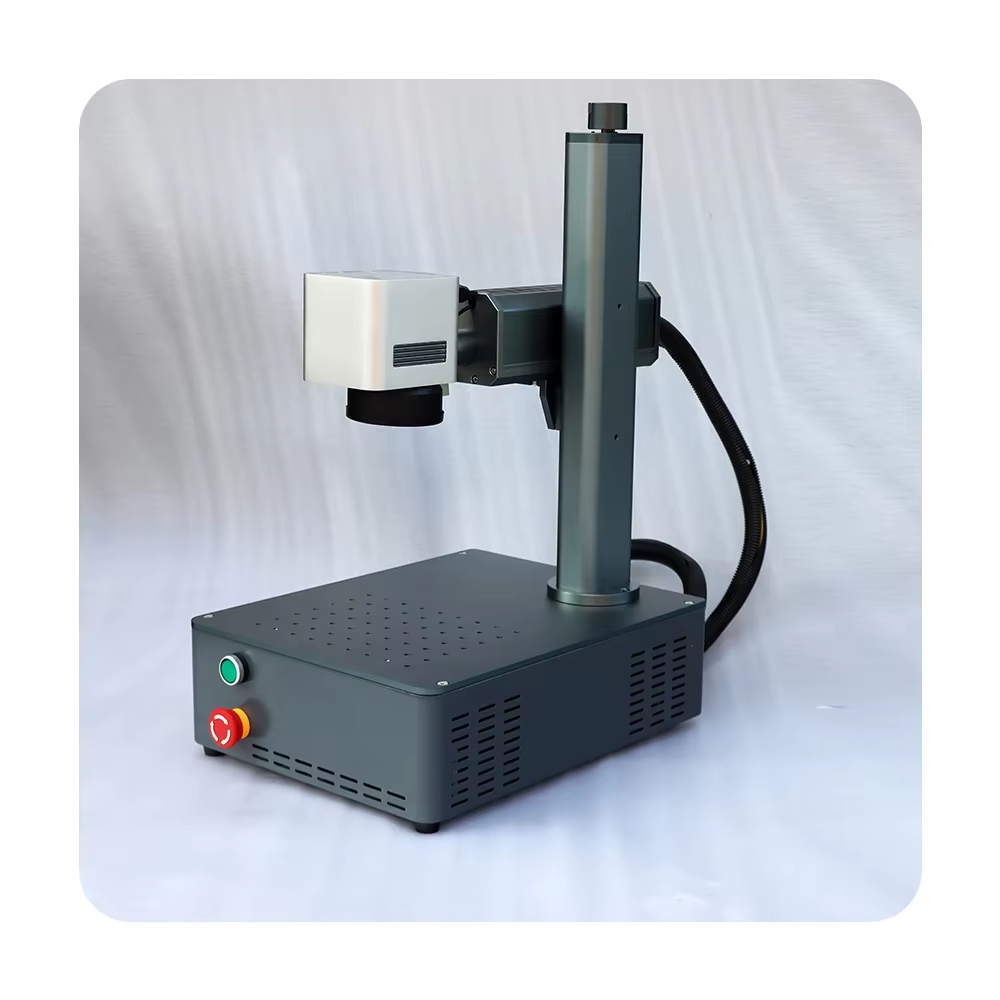
Fiber laser markers create indelible identification on metal components through advanced photothermal reactions—ensuring critical traceability data remains intact throughout a part’s operational lifespan.
How fiber laser marking creates a permanent metallurgical bond through surface ablation
When a focused infrared beam hits the metal surface at around 1064 nanometers wavelength, it creates extremely hot spots that can reach temperatures well over 10,000 degrees Celsius in just milliseconds. The intense heat doesn't simply melt the surface though. Instead, it actually changes how the metal's structure behaves at a fundamental level through a process called ablation. What we get from this isn't just something applied on top, but rather genuine chemical transformations within the material itself. These transformations produce distinct color contrasts caused by oxidation or tiny engraved features that form down at the molecular scale. The laser creates marks smaller than 20 micrometers across, and can control depth between roughly 5 to 50 micrometers depending on settings. Since these markings become integrated into the actual crystal lattice of the metal rather than sitting on top as paint might, they won't peel off, lose their appearance, or wear down unless someone physically removes parts of the original metal.
Resistance of fiber laser marks to heat, corrosion, and abrasion in industrial environments
Fiber laser marks are engineered for mission-critical durability:
- Heat resistance: Stable beyond 1000°C—validated in engine compartments and autoclave sterilization cycles
- Corrosion immunity: Pass ASTM B117 salt spray testing for 500+ hours with no legibility loss
- Abrasion endurance: Withstand sandblasting, aggressive chemical cleaning, and repeated mechanical contact
Accelerated aging tests simulating over a decade of service show 99.2% readability retention—ensuring Data Matrix codes and other machine-readable identifiers remain scannable across manufacturing, maintenance, and end-of-life recycling.
Fiber Laser Markers and Compliance with Metal Part Traceability Standards
Meeting traceability requirements: Serial numbers, VINs, and data matrix codes on metal
Fiber lasers can create really clear serial numbers, VINs, and those 2D Data Matrix codes right onto metal surfaces. These meet the tough requirements for permanence and readability across industries like automotive, aerospace, medical equipment manufacturing, and energy production. What makes this different from regular labels or ink printing? Laser markings actually hold up through harsh conditions. They withstand industrial cleaning processes, temperature changes during operation, and all sorts of physical wear and tear without fading away. Some independent tests have shown these codes remain readable at around 99.8% accuracy even after being subjected to what would normally take about 20 years in real world usage. That means parts stay scannable when needed for product recalls, catching fake products, and conducting quality checks, all while keeping the original component intact and functional.
Precision and Material Compatibility of Fiber Laser Marking on Metals
Effective Marking on Stainless Steel, Aluminum, Titanium, and Industrial Alloys
Fiber lasers produce reliable, high quality markings on all sorts of metals because they work with the right 1064 nm wavelength that gets absorbed well by different materials. They balance how much energy goes into each metal with how it reacts to heat. For stainless steel, these lasers make marks that resist oxidation in black or gold colors. When working with aluminum, they avoid burning through the metal while keeping its reflective properties intact. With titanium, the process maintains both biocompatibility and fatigue strength important for things like medical implants. And when dealing with nickel or cobalt based superalloys, fiber lasers create durable direct part marks without affecting creep resistance characteristics. The system comes with preset parameters that adjust automatically based on factors like reflectivity, conductivity, and surface shape. This means consistent mark depths ranging from about 5 micrometers up to 200 micrometers even on tricky surfaces that are curved, textured, or not flat at all. Because of this flexibility, manufacturers can ensure clear and compliant product identification across various industries including aerospace components, electric vehicle battery casings, surgical tools, and valves used in oil fields where parts must withstand harsh conditions involving chemicals, intense heat, and significant mechanical stress.
FAQ
What makes fiber laser marking permanent?
The fiber laser marking process involves creating a metallurgical bond through surface ablation, which integrates marks into the metal's crystal lattice, making them resistant to peeling, fading, or wearing down.
Can fiber laser marks withstand high temperatures?
Yes, fiber laser marks are stable beyond 1000°C and have been validated in harsh environments like engine compartments and autoclave sterilization cycles.
Do fiber laser marks comply with industry standards?
Fiber lasers deliver consistent, verifiable compliance with standards like AS9132, ISO/IEC 15415, and AIAG B-17, ensuring durable and machine-readable markings.
How do fiber lasers work on different metals?
Fiber lasers use a 1064 nm wavelength that works well with various metals by adjusting parameters based on reflectivity and conductivity, ensuring effective marking on stainless steel, aluminum, titanium, and industrial alloys.