 EN
EN

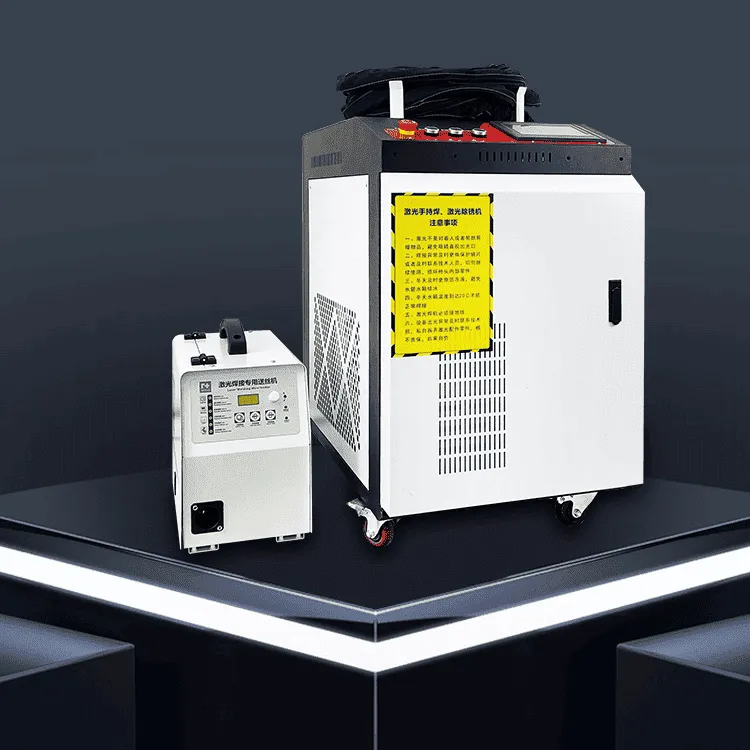
Why Water Cooled Lasers Are Essential for Reliable Thick Plate Welding
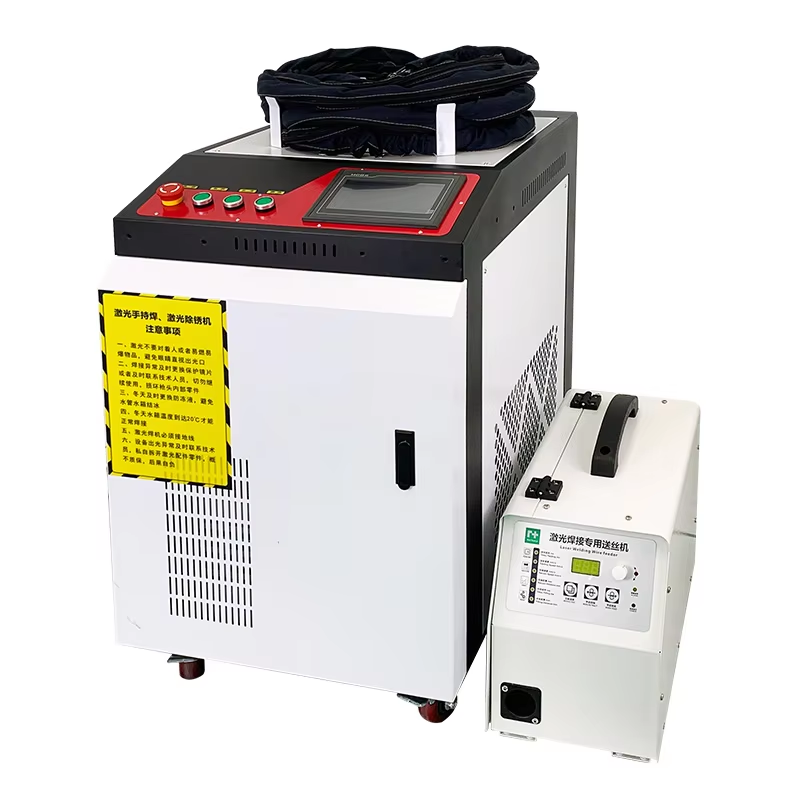
Thermal Management Limits: Why Air-Cooled Lasers Fail Beyond 20 mm Plate Thickness
When working with plates thicker than about 20 mm, air cooled laser systems hit their thermal limits pretty quickly. The passive cooling just isn't enough to handle all that heat buildup from deep penetration welding. What happens next? Beam distortion starts to occur, power becomes unstable, and those expensive optical components begin to degrade much faster than expected. Take a standard 1500 watt air cooled laser for example it can manage around 1.5 to maybe 2 mm of weld depth per pass before things start getting too hot for comfort and beam quality drops off significantly. Once we go past that 20 mm mark, temperature swings get completely out of control which leads to inconsistent results and potential damage to both workpieces and equipment alike.
- Thermal lensing that defocuses the beam
- Accelerated optics wear requiring frequent replacement
- Power output drops exceeding 15% during continuous operation
These issues force multi-pass strategies increasing cycle time by up to 70% and raising the risk of lack-of-fusion, porosity, and distortion. In contrast, water cooled lasers employ active refrigeration to maintain component temperatures within ±0.5°C, enabling stable, high-power single-pass welding on thick sections.
Industrial Validation: 12 kW Water Cooled Laser Performance on Q690 Steel
A 12 kW water cooled laser system achieved full-penetration welds on 30 mm Q690 high-strength steel common in mining equipment and structural infrastructure demonstrating decisive performance advantages. Trials confirmed:
- Stable keyhole formation at 2.4 m/min travel speed
- Porosity rates below 0.2%, enabled by synchronized pulse modulation
- 38% reduction in heat-affected zone (HAZ) width versus conventional arc welding
The system maintained around 98% power stability during long runs, which gets rid of those annoying output dips we typically see with air cooled setups. For materials such as Q690 steel that react badly to temperature fluctuations, this kind of consistent performance really matters because uneven heat can cause cracks to form. Looking at weld samples after testing showed pretty much the same grain structure throughout, and they measured about 540 MPa in tensile strength. That's actually better than what both ASME Section IX and EN 15614-1 standards require for parts under heavy loads.
Achieving Full Penetration with Stable Keyhole Welding Using Water Cooled Lasers
Power Density Thresholds and Beam Stability Requirements for Defect-Free Keyholes in 30–50 mm Steel
Getting a proper keyhole started in thick steel needs at least 1.5 MW per square centimeter of power density. But go past 3.0 MW/cm² and things start getting unstable real quick. That's where water cooled lasers come in handy. They can keep that tiny focal spot between 0.1 and 0.3 mm which is exactly what we need for maintaining consistent vapor channels through those 30 to 50 mm thick sections. The beam power shouldn't fluctuate much either. Studies have found that when it goes over 2%, porosity problems jump up around 40% in Q690 steel parts. When dealing with 40 mm deep cuts, using low frequency beam oscillations makes all the difference. Around 50 Hz or less with movements no bigger than 1 mm helps the molten metal flow better and reduces spatter issues. Best part? It doesn't mess with the keyhole structure during the process.
Pulse Modulation and Cooling-Synchronized Beam Delivery to Eliminate Porosity and Spatter
When pulsed waveforms are synchronized with coolant flow cycles, it helps reduce thermal shock significantly. Tests have shown this approach can cut down on porosity by around 60% in laboratory settings. The modulation of pulses within the range of 100 to 500 Hz plays a crucial role in keeping keyhole walls stable and preventing those pesky vapor bubbles from getting trapped. Timing the laser beam delivery right when coolant flow peaks makes sure the power stays consistent across the workpiece surface. These coordinated efforts bring spatter levels down below five particles per square centimeter, which is pretty impressive. Plus, the heat affected zone gets smaller by about 22% compared to what happens with systems that aren't properly synced. This matters a lot for anyone working with thick high-strength alloys over 30 mm in thickness where precision really counts.
Minimizing Heat-Affected Zone and Distortion Through Precision Water Cooled Laser Control
HAZ Reduction Metrics: 38% Contraction Achieved at 25 mm Thickness with 8 kW Water Cooled Laser
Better temperature management makes water cooled lasers much better at shrinking the heat affected area (HAZ) and reducing warping in materials during welding, which helps keep important mechanical properties intact when working with thicker sections. When tested on plates 25mm thick, these systems cut down HAZ width by about 38% compared to older techniques. What does this mean for actual applications? The material stays strong right where it counts. Tests showed that hardness levels remained at around 95% of original values just 1.5mm away from the weld line, so the integrity of the workpiece isn't compromised as much as traditional methods would suggest.
Three interdependent factors drive this precision:
- Thermal Regulation: Closed-loop coolant circulation holds laser diode temperatures within ±0.5°C
- Energy Density Optimization: Tight beam focus confines heat input, limiting lateral diffusion
- Process Stability: Sub-2% power fluctuation prevents localized overheating and uneven expansion
The result is up to 60% fewer post-weld correction operations making water cooled lasers indispensable for pressure vessels, offshore platforms, and other high-integrity applications governed by ASME BPVC and DNV-OS-F101 standards.
Ensuring End-to-End Process Stability: From Laser Output Consistency to Weld Integrity
Getting reliable results when welding thick plates requires stable processes throughout everything involved, not just the laser itself. Water cooling definitely helps manage heat issues, but real consistency comes down to three main factors working together all the time: keeping the laser output steady, properly preparing materials before welding starts, and having control systems that can adapt while the job is happening. We've seen that if power levels fluctuate more than about 1.5%, there's a good chance of getting incomplete fusion in plates over 25mm thick. And this kind of defect costs around $740,000 each year in rework expenses for most production lines according to the Ponemon Institute report from 2023. The latest adaptive systems now use temperature controlled diodes along with sensors that track seams as they go, allowing automatic adjustments to focus and power mid-weld. This keeps the molten pool stable even when joints aren't perfectly aligned or surfaces vary slightly. These closed loop controls actually cut porosity problems by roughly 60% compared to old manual methods. Add in standard procedures for how joints are fitted together, proper shielding gas flow rates (around 18 to 22 liters per minute using argon and helium mixtures works well), and recorded settings for different situations, and manufacturers see much better results. Companies adopting these approaches typically reduce scrap caused by distortion by about 35%, and maintain penetration accuracy within plus or minus 0.2mm across thousands of welds, something confirmed through various studies on industrial welding stability.
FAQ
Why are air-cooled lasers ineffective for thick plate welding?
Air-cooled lasers quickly reach their thermal limits in plates thicker than 20 mm, causing beam distortion and reduced power stability, leading to inconsistent welding results.
How do water-cooled lasers benefit thick plate welding?
Water-cooled lasers use active cooling to maintain stable temperatures and power output, enabling high-power single-pass welding on thick sections.
What are some key performance metrics for water-cooled lasers in thick welding?
Key metrics include stable keyhole formation, reduced porosity rates, and minimized heat-affected zone width, ensuring better quality and structural integrity.
How do synchronized coolant flow and pulse modulation improve welding?
Synchronized flow reduces thermal shock and porosity, while pulse modulation maintains keyhole stability, enhancing weld quality and consistency.
Table of Contents
- Why Water Cooled Lasers Are Essential for Reliable Thick Plate Welding
- Achieving Full Penetration with Stable Keyhole Welding Using Water Cooled Lasers
- Minimizing Heat-Affected Zone and Distortion Through Precision Water Cooled Laser Control
- Ensuring End-to-End Process Stability: From Laser Output Consistency to Weld Integrity
- FAQ