 EN
EN

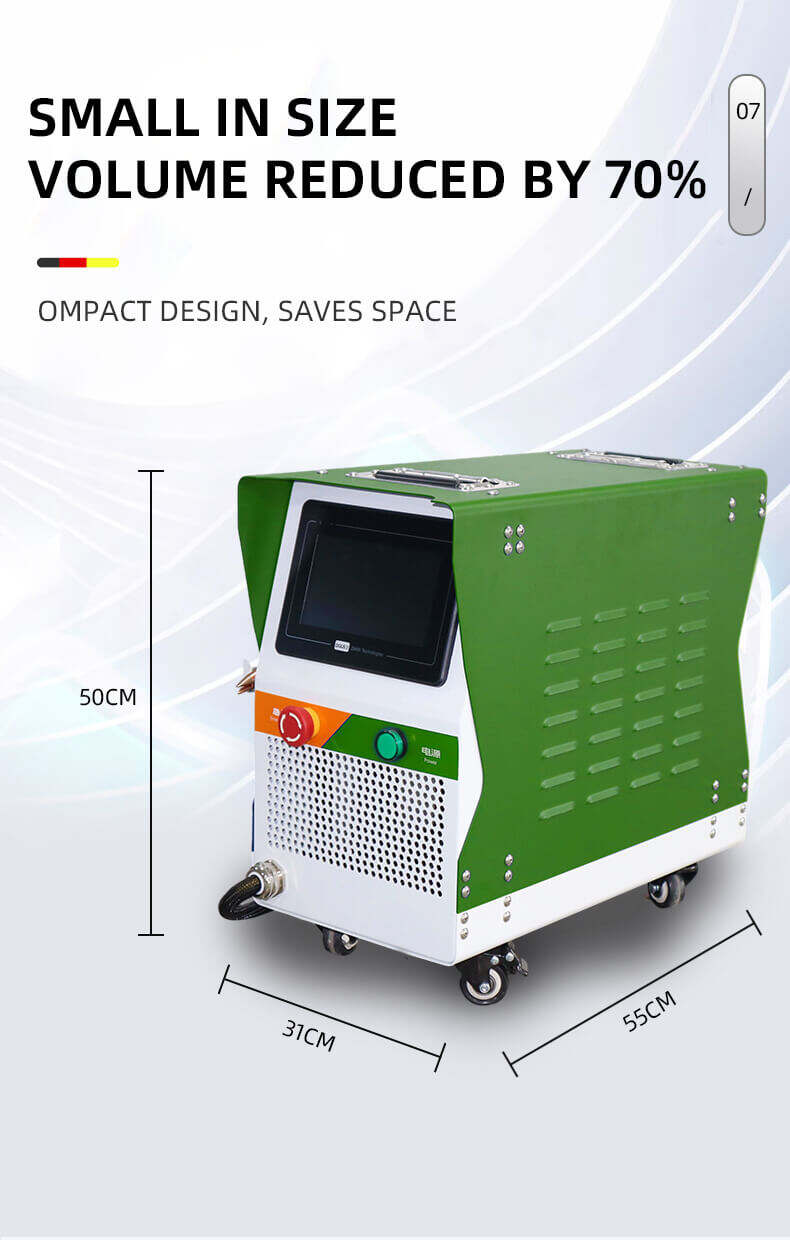
Why Laser Welding Excels in Small-Batch Production
Minimal Heat-Affected Zone Preserves Part Integrity
Laser welding focuses energy right on those weld seams with pinpoint accuracy, shrinking the heat affected area down to around 0.1 to 0.5 mm. That's way smaller than what we see with arc welding which usually affects 2 to 5 mm of surrounding material. The result? Less warping happens in sensitive parts like heart valves or aircraft connectors. When materials retain their original structure after welding, important characteristics stay intact too. Think about how certain metals keep their strength and ability to withstand repeated stress even after being welded. Getting better dimensional control means factories spend 70% less time fixing warped pieces after welding. And when dealing with specialty products made in limited runs, saving money on rework can make all the difference for manufacturers.
Rapid Setup and Process Stability Reduce Changeover Time
With CNC programmed lasers, there's no need to swap out physical tools anymore. Operators just upload digital profiles when they want different shapes, which cuts down setup time dramatically - sometimes going from hours down to just a few minutes work. The closed loop power control system takes away all those little differences that come from human operators, so the whole process stays really stable throughout production runs. According to research published by the Federation of Manufacturing Systems in 2023, these laser setups hit around 90% success rate on the first try, while traditional welding methods only manage about 65%. And get this: when dealing with small batches of fewer than 100 items, factories are seeing changeover speeds jump by roughly 45%. That makes running tiny production runs actually worth doing financially instead of being a money losing proposition as it often was before.
Case Study: Medical Device OEM Cuts Setup Time by 68% for Sub-50-Unit Batches
A medical device manufacturer switched from TIG to robotic laser welding for pacemaker battery casings. Pre-production setup dropped from 3.5 hours to 1.1 hours per batch—accelerating custom order fulfillment. Key outcomes included:
- Distortion held below 0.1 mm tolerance without post-machining
- 97% reduction in argon consumption versus gas-shielded methods
- ROI achieved in eight months across 400 annual batch turnovers
This demonstrates how laser welding supports high-mix, ultra-low-volume production without compromising quality or economics.
Laser Welding Enables True Customization Across Materials and Geometries
Programmable Beam Paths Support Complex, Non-Standard Joint Designs
Digital beam path control gives manufacturers much more flexibility when creating custom parts. With CNC guided optics, complex shapes become possible things that traditional torch setups simply cant handle. Think about all those tricky curves, sharp corners inside parts, and other details that would break standard equipment. The system can repeat itself down to microns while still making each weld unique where needed. One big name in aerospace cut their rework rate almost in half after switching to this method for sensor housing production. Their variable angle welds on these complicated joints showed just how much better digital control works compared to old school approaches, especially when dealing with small batch runs where every mistake costs money.
Non-Contact Processing Allows Reliable Welding of Dissimilar and Thin Materials
Laser welding works without touching the material directly, so there's no electrode wear, contamination issues, or mechanical stress involved. This makes it especially good for working with very thin foils under half a millimeter thick, plus those sensitive to oxygen exposure or already finished surfaces. The way the energy gets focused allows different kinds of metal to fuse together pretty well, even tricky combinations like copper and aluminum or titanium with stainless steel. We're talking about welds with less than 1% porosity and not much intermetallic stuff forming either. For industries where precision matters a lot, this kind of welding opens doors in areas such as tiny electronic components packaging and creating completely sealed medical equipment that needs to stay sterile inside.
Case Study: Titanium–Inconel Hybrid Bracket Achieves <0.05mm Distortion Tolerance
An aviation manufacturer needed 27 custom brackets fusing Grade 5 titanium with Inconel 718 for thermal management systems. Traditional welding caused 0.3 mm distortion due to uneven heat input, necessitating secondary machining. Pulsed laser welding with real-time pyrometry delivered:
| Parameter | Result | Improvement |
|---|---|---|
| Distortion | <0.05mm | 83% reduction |
| Process time | 8.2 minutes/unit | 55% faster |
| Rejection rate | 0.7% | 94% lower |
The joints retained ultimate tensile strength above 900 MPa while eliminating all secondary operations—validating laser welding’s readiness for mission-critical hybrid assemblies.
Handheld and Collaborative Laser Welding: Merging Craftsmanship with Consistency
Portable Laser Systems Empower Skilled Technicians in Low-Volume Repair and Prototyping
Handheld laser welders, usually below 500 watts, bring together portability and pretty good beam stability around 2% power variation, which allows for accurate welding right at the worksite or wherever needed in workshops. These portable units make it easy to switch from one kind of project to another without having to stop and recalibrate everything. Think about fixing damaged turbine blades, making adjustments to medical tools, or working through prototype versions. Technicians out in the field have noticed they can finish small batch jobs about 40% quicker these days, though numbers might vary depending on who's tracking them. The 2024 industry reports definitely back up this trend toward faster turnaround times.
Real-Time Power Control and Vision Feedback Ensure Repeatable, Operator-Guided Quality
The latest handheld equipment comes equipped with closed loop thermal monitoring plus live vision feedback features. These allow for quick power changes happening every 10 milliseconds or so, which helps avoid those pesky burn through issues when working with thin materials. When this kind of real time response works hand in hand with skilled operators, we're talking about achieving around 0.1 mm accuracy in repeated paths across different machines. A study from the Advanced Joining Quarterly last year found these systems cut down on rework by nearly 60 percent for custom fabrication jobs. This actually demonstrates something interesting: good old fashioned craftsmanship doesn't have to clash with modern day consistency requirements in manufacturing settings.
FAQ
What are the advantages of laser welding in small-batch production?
Laser welding provides precise energy focus and a minimal heat-affected zone, effectively reducing warping and maintaining material strength. It also allows for rapid setup and stable processes, which cuts down changeover time and costs.
How does laser welding enable customization?
It features programmable beam paths for non-standard designs and supports welding dissimilar and thin materials without contact, allowing for flexibility and precision in creating unique parts.
What kind of materials can be welded with laser technology?
Laser welding is compatible with a wide range of materials, including titanium, Inconel, copper, aluminum, and stainless steel, making it versatile for various applications.
Why use handheld laser systems?
Handheld laser systems offer portability, excellent beam stability, and quick setup, empowering technicians to handle repairs and prototyping efficiently on-site.