 EN
EN

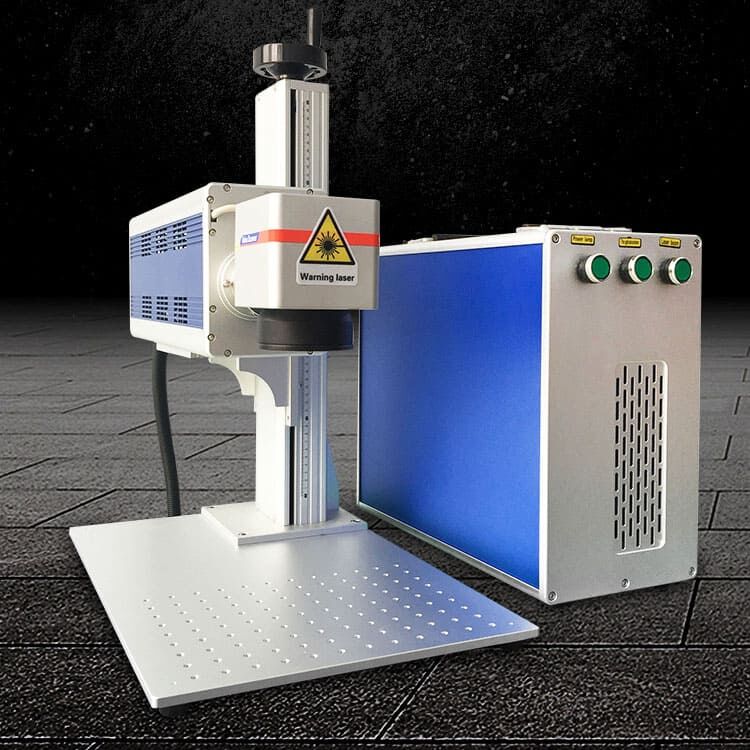
The Consistency Challenge in Mass Production Laser Marking
Why Traditional Laser Marking Fails Under High-Volume Variability
Old school laser marking setups just don't cut it when scaling up for mass production because they rely on fixed position programming without any real time adjustments. On those fast moving assembly lines where parts are constantly shifting around, even small misalignments create all sorts of problems with consistent marking quality. The equipment also suffers from thermal drift issues when running non stop. As components heat up over time, the optics lose their precision since everything expands differently. Different materials present another headache too. Some surfaces reflect light better than others, making it hard to get accurate positioning every single time. For industries where precision matters most, something as tiny as a 0.1mm shift makes all the difference between readable marks and total failure. This affects not only product traceability but also regulatory compliance requirements that many manufacturers have to deal with daily.
Quantifying Consistency Loss: Defect Rates and Rework Costs in Automotive and Electronics Lines
When laser markings aren't consistent, companies end up facing real money problems and operational headaches. Take the automotive industry for instance. If a VIN gets misplaced on brake calipers, the whole part has to go into the trash bin. We're talking anywhere from $150 to over $500 wasted on each faulty unit when considering both scrap materials and labor costs. The electronics sector isn't far behind either. Printed circuit boards often see around 3 to 5 percent rejected during mass production runs because of marking issues. Looking at industry numbers, roughly 12 to 18 percent of production budgets get eaten up by having to fix these mistakes. Automotive plants alone report losing about seven hundred forty thousand dollars every year per production line according to Ponemon's 2023 findings. And these expenses don't just sit within one company. They ripple throughout entire supply chains, causing delivery delays and putting businesses at greater risk of running afoul of regulations.
| Industry | Common Defect | Avg. Rework Cost per Unit | Annual Impact per Line |
|---|---|---|---|
| Automotive | Misregistered VIN/part numbers | $220 | $740k |
| Electronics | Unreadable PCB/circuit markings | $85 | $310k |
How Vision-Guided Laser Marking Enables Real-Time Positional Correction
Machine Vision Integration with Laser Marking Systems for Sub-Pixel Registration
Laser marking systems guided by vision technology tackle those tiny positioning issues thanks to high res cameras that can spot substrate shifts down to about 0.01mm either way. The system takes live pictures of components like printed circuit boards or automotive brake calipers to find key reference points such as edges or those special fiducial markers, then works out exactly where things need to be positioned. Smart software tweaks the laser's path right before it starts marking, which allows for super accurate alignment so codes stay readable and no damage happens to densely packed electronic parts. No more needing those stiff fixtures that break down when materials warp or when there's vibration from conveyor belts running nearby. Manufacturers report around 99.7 percent success rate on the first try in actual factory settings these days.
Closed-Loop Feedback That Ensures Laser Marking Accuracy and Repeatability
Getting true repeatability requires more than just setting things right at the start. It needs ongoing feedback throughout the whole process. Galvanometer scanners come with position sensors and error amplifiers that actually adjust where the beam lands as it works. If something happens like heat making things shift or vibrations messing with precision at the micron level, these systems pick up on those changes fast. They can tweak mirror angles in under a millisecond to keep everything aligned properly. The result? Marks stay consistent in depth, look good visually, and end up exactly where they should be after running through thousands of operations. This kind of reliability is absolutely necessary when marking safety critical items such as brake calipers or medical equipment where traceability matters most. Looking at numbers compared to older open loop methods shows we cut down positional errors by around 92 percent without slowing production below 2000 parts per hour which makes all the difference in manufacturing efficiency.
| Correction Mechanism | Traditional Systems | Vision-Guided Systems |
|---|---|---|
| Positional Accuracy | ±0.1mm (manual alignment) | ±0.01mm (automated vision) |
| Error Response Time | 50â100ms (reactive) | <1ms (real-time) |
| Defect Rate Reduction | Baseline | Up to 92% (Ponemon 2023) |
Laser Marking for Traceability and Industry 4.0 Quality Control
Laser marking provides lasting identification that can't be messed with, which is really important for tracking products all the way through Industry 4.0 manufacturing processes. Regular inkjet labels or sticky tags tend to wear out, fall off, or get smudged over time. But laser etched codes hold up against pretty much anything thrown at them like intense heat, harsh chemicals, rough handling, even sterilization procedures. Because they last so long, these codes stay readable throughout the whole production journey starting with raw materials coming in, going through assembly lines, and right out into service in the field. Companies across different sectors like automotive parts makers, medical device producers, and aircraft component manufacturers depend on this kind of marking to satisfy tough regulations such as those set by ISO 9001 quality management system requirements. According to research from Ponemon Institute in 2023, companies save around $740,000 each time there's a product recall thanks to better traceability enabled by laser marking technology. When connected to IoT systems, laser marking does more than just identify parts it helps monitor quality in real time, automatically creates compliance records, stops fake products from getting into supply chains using unique microscopic textures, and keeps track of where every component came from originally. What's interesting is how these marks aren't just stickers anymore but actually become smart sensors built into products themselves once they start collecting data about performance and sending that info back to maintenance systems for analysis.
Proven Gains: Automotive Case Study in Laser Marking Consistency
Before-and-After Metrics: 92% Reduction in Mark Misregistration on Brake Calipers
Brake calipers demand absolute traceability: a single misregistered Data Matrix code compromises safety validation, regulatory compliance, and supply chain visibility. Prior to upgrading, traditional laser marking struggled with part positioning variationâleading to tolerance drift, elevated scrap, and labor-intensive rework consuming 4.7% of daily output.
When they implemented vision guided laser marking along with closed loop feedback systems, the setup managed to spot deviations as small as about half a tenth of a millimeter in real time and automatically adjust the marking path before it happened. What did this mean on the factory floor? A massive drop in marking errors - down nearly 92% over 300 thousand parts made each month. The scrap rate went from around 4.7% all the way down to just 0.3%, which translated into roughly seven hundred forty thousand dollars saved every year according to some research from Ponemon back in 2023. And here's what makes this really interesting: even when fixtures start wearing out or temperatures fluctuate causing expansion issues, these systems still maintain their accuracy. So while many might think consistent laser marking at such volumes sounds impossible, what we're seeing now shows that it's actually possible and essential if companies want better control over costs and meet those tough regulations required in automotive manufacturing today.
FAQ
What are the main challenges of traditional laser marking in mass production?
Traditional laser marking systems struggle with real-time adjustments and are affected by thermal drift and material variability, which can cause misalignment and inconsistencies during high-volume production.
How do vision-guided laser marking systems improve accuracy?
Vision-guided systems use high-resolution cameras and smart software to spot and adjust for substrate shifts in real time, ensuring precise positional accuracy and reducing defects.
Why is laser marking important for traceability and quality control?
Laser marking provides durable, unalterable identification codes that withstand harsh environments, ensuring product traceability, compliance with regulations, and enhancing Industry 4.0 quality control measures.
What financial benefits do vision-guided systems offer manufacturers?
By significantly reducing defect rates and rework costs, vision-guided systems save manufacturers substantial amounts of money and increase production efficiency, as evidenced by case studies in the automotive industry.